HHS partners with ILADS: a step forward for Lyme patients, but the journey isn’t over
By Terri McCormick
The U.S. Department of Health and Human Services (HHS) has announced a partnership with the International Lyme and Associated Diseases Society (ILADS).
This move has surprised many in the Lyme community, because for decades, federal health authorities kept their distance from ILADS.
Instead, officials promoted Lyme disease resources aligned with the more restrictive framework outlined by the Infectious Disease Society of America.
The IDSA Lyme guidelines deny the existence of chronic Lyme disease and limit treatment to short, narrowly defined courses of antibiotics.
The IDSA guidelines have long shaped medical practice and insurance coverage, leaving many Lyme patients without access to appropriate care. The result has been missed diagnoses, delayed treatment, and unnecessary suffering.
In contrast, ILADS is made up of practitioners who actually treat persistent Lyme disease and its myriad co-infections. Many in the Lyme community have found that finally being treated by an ILADS physician is what helped them return to health.
This collaboration between HHS and ILADS recognizes the importance of advanced physician education on tick-borne illnesses and helps patients connect with clinicians who have pursued additional training to better understand the complexity of Lyme disease and other tick-borne illnesses.
As part of this new effort, HHS has launched a dedicated Lyme disease webpage that includes a direct link to the ILADS provider search. This addition may help patients who have struggled to find knowledgeable care connect with healthcare providers who understand the complexity of tick-borne illnesses.
What is ILADS?

ILADS is a nonprofit medical society dedicated to the prevention, diagnosis, and treatment of Lyme disease and other tick-borne illnesses.
Most healthcare professionals receive limited education in tick‑borne diseases during their formal training. Practitioners involved with ILADS choose to pursue additional education focused specifically on these infections. Their training explores the many ways tick‑borne illnesses can present and includes topics such as laboratory testing, co‑infections, and symptoms affecting the nervous system, mental health, heart, joints, and muscles.
Because tick-borne illnesses can mimic many other conditions, patients do not always present with the classic signs commonly associated with Lyme disease. ILADS educational programs emphasize individualized care, clinical judgment and are guided by evidence-based treatment guidelines that recognize the complexity and variability of these infections.
Getting started: Four steps to finding care
Step 1: Visit HHS.gov/lyme
The new HHS webpage provides information about Lyme disease and infection-associated tick-borne illnesses. Midway down the page, patients will find a clickable link labeled “Clinician Locator.” Selecting this link takes users to the ILADS Provider Search.
Step 2: Search by zip code
Patients then enter their zip code, select 100 mile radius, and view a list of clinicians within that area. Along with each provider’s contact information, patients will see designations that reflect different levels of education and mentorship within ILADS.
Step 3: Understand the provider designations
Understanding these designations can help patients learn more about a provider’s educational background and involvement with ILADS.
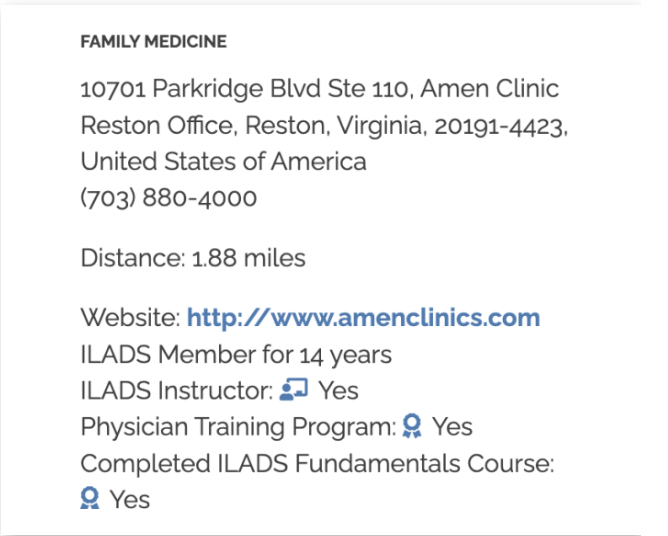
ILADS Member: Indicates an interest in tick-borne illness education and provides access to conferences, continuing education, and clinical resources.
ILADS Instructor: Identifies experienced clinicians who teach and mentor other healthcare professionals through ILADS educational programs.
Physician Training Program: Signifies that the provider has completed a personalized, one-on-one mentorship designed to equip medical professionals with the knowledge, clinical skills, and confidence needed to diagnose and treat Lyme disease and other tick-borne illnesses using evidence-based approaches in a real-world patient care setting.
Completed ILADS Fundamentals Course: This course provides an in-depth examination of the basic science, clinical experience, and trial evidence related to diagnosing and treating patients infected with Lyme and other tick-borne diseases
ILADS Fellow: Recognizes clinicians who have achieved one of the highest levels of education offered by ILADS through advanced coursework, mentorship, and ongoing involvement with the organization.
Step 4: No single credential tells the whole story
These designations provide helpful information, but they are only one factor in choosing a healthcare provider.

Patients may also want to consider whether a provider treats adults or children, offers telemedicine, or specializes in areas such as neurology, psychiatry, rheumatology, or family medicine. Travel distance, communication style, and personal comfort matter as well.
Finding the right provider is a personal decision, and what works for one patient may not be the best fit for another.
Progress has been made, but more work lies ahead
The addition of the ILADS clinician locator to the HHS Lyme disease webpage is a meaningful step forward. Yet for many patients, this change alone will not translate into accessible care.
ILADS-affiliated providers are not available in every state, leaving some patients to travel long distances or rely on telemedicine. For individuals already struggling with fatigue, pain, cognitive difficulties, and neurological symptoms, the physical and financial burden of seeking treatment can be overwhelming.
Missouri illustrates the problem. Following the recent death of the state’s only experienced ILADS physician, many patients have been left with nowhere to turn.
“People are traveling to neighboring states or relying on telemedicine, and the waiting lists continue to grow,” said Melinda Sander of Missouri Lyme Alliance and the Center for Lyme Action. “We desperately need more doctors to pursue advanced training in tick-borne illnesses so patients can receive care closer to home.”
“Many of the people who contact us have been told they do not have tick-borne illnesses,” said Judy Campbell, president of the Lyme Association of Greater Kansas City. “Some are made to feel that their symptoms are all in their head, leaving patients feeling isolated and hopeless.”
What patients still need
Lyme patients still face daunting challenges. One of the biggest is the financial burden of getting specialized care for tick‑borne illnesses. Insurance rarely covers treatment for chronic Lyme disease, largely because the IDSA guidelines do not support extended treatment.
As a result, patients are often forced to pay out of pocket for long appointments, frequent follow‑ups, and complex care that falls outside standard insurance models. For many families, these costs quickly become unsustainable. The expenses pile up alongside lost income, travel requirements, and the daily struggles of living with a debilitating illness.
Patients also need earlier recognition of tick-borne illnesses. More education is needed among the public, so people understand the risks and symptoms. More healthcare professionals need advanced training so these diseases can be recognized and treated earlier.
More research is needed to improve testing, develop better treatments, and deepen understanding of persistent symptoms.
And ultimately, patients need what every person hopes for: relief.
Relief from the symptoms that disrupt careers, education, and family life.
And someday, a cure.
Progress has been made, but the journey is far from over.
Resources
International Lyme and Associated Diseases Society
Please consider sharing these resources with family members, friends, and healthcare providers.
Terri McCormick is a writer and advocate with LymeDisease.org. She is the author of Being Misdiagnosed: Stories That Reveal the Hidden Epidemic of Lyme Disease. The book is available on Amazon and at TerriMcCormick.com.