Being Misdiagnosed
Stories That Reveal The Hidden Epidemic of Lyme Disease
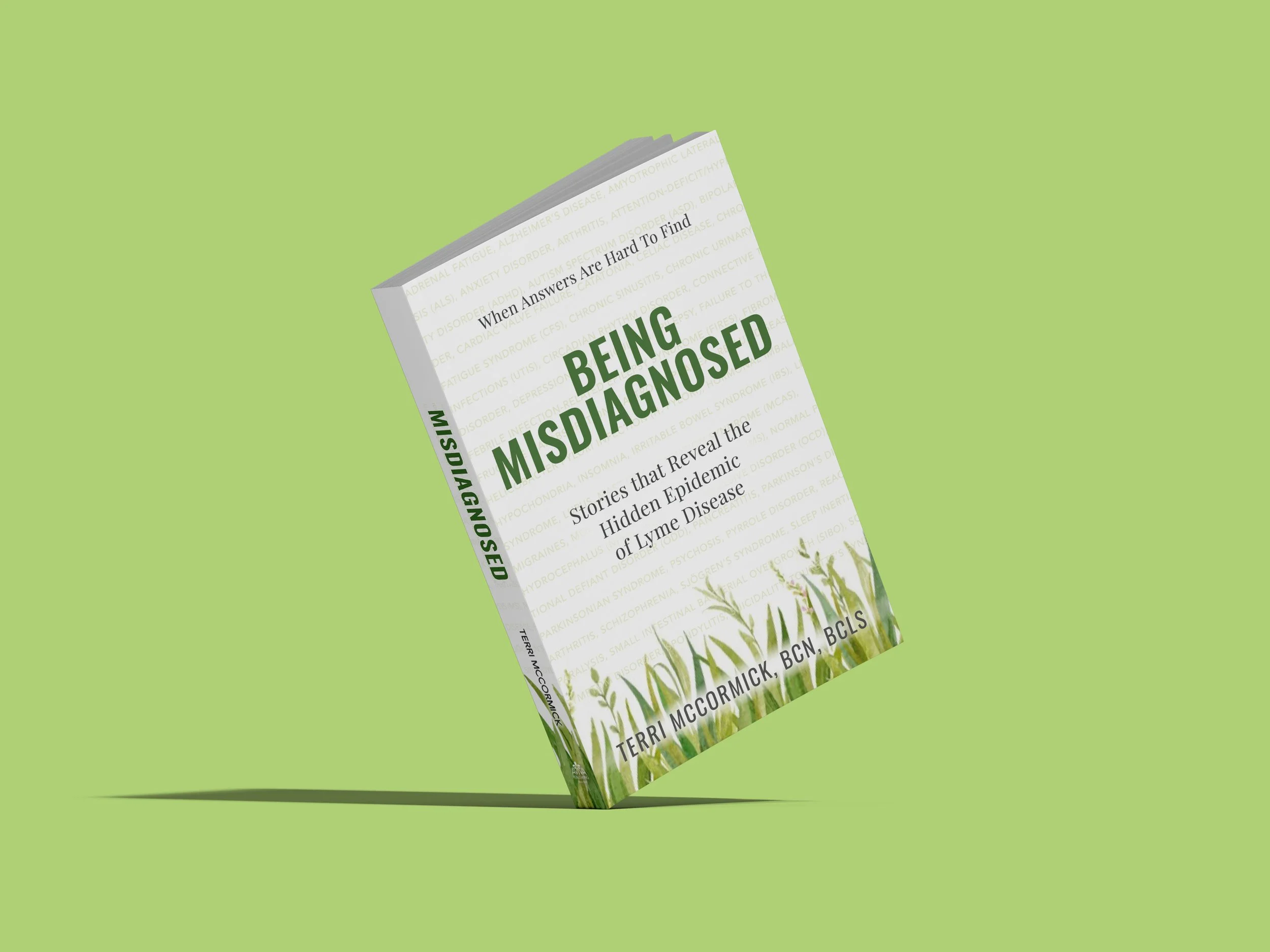
Lyme disease is called “the great imitator” for a reason. Too often it hides behind diagnoses like MS, ALS, fibromyalgia, and depression, leaving families searching for answers in a maze of confusion and delay.
In Being Misdiagnosed, author and advocate Terri McCormick shares twelve real stories of people whose lives were changed by discovering the truth. Part personal testimony, part resource, this book sheds light on the human cost of misdiagnosis and offers knowledge, hope, and direction for anyone navigating chronic illness.
If you’ve felt dismissed, misunderstood, or out of options, this book may be the perspective and encouragement you’ve been waiting for.
Selected Endorsements
“I’m honored to recommend Terri McCormick’s Misdiagnosed. She transforms her personal journey into a powerful resource for those searching for answers. These stories are more than case studies—they are lifelines for families often overlooked by a system that struggles with complex illness. With deep knowledge and compassionate advocacy, Terri sheds light on widespread misdiagnosis, making this essential reading for patients and healthcare providers alike.”
— Deb Muth, ND
“Patients with Lyme disease have been misdiagnosed with over one hundred other conditions. Lyme disease… has earned the label of the new great imitator. To diagnose when there is a unique presentation of Lyme disease, it is important to think outside of the box. Many are trained to think inside the box… and miss the diagnosis. The patients in this book start from many different perspectives, but end up at the same point—a diagnosis of Lyme disease and treatment for it.”
-Robert C Bransfield, MD,
DLFAPA, DILADS
“At some point, we are all patients, caregivers, or physicians responsible for others. Terri McCormick’s work offers a compelling and eye-opening look at what happens when illness does not fit the traditional model of diagnosis and treatment. It reminds us that suffering is often complex and not easily explained, calling for broader thinking, careful listening, and humility in care. The message is clear: never give up hope, and never dismiss what cannot yet be fully understood.”
— Christine L. Saba , MD,
PharmD, FAAP
Interested in learning more?
Fill out some info and we will be in touch shortly. We can’t wait to hear from you!